What are Golf Swing Errors and How To Fix Them
Swing errors are specific mistakes that are made in the course of a live golf swing, when the club is moving. This is in contrast to an address & setup error that deals with mistakes made prior to beginning a golf swing, while the golfer is positioning himself ahead of a shot.
Browsing the various errors found in this section can help self-diagnose mistakes that you suspect you are making in the course of your golf swing. It can also help you figure out which mistakes you may want to avoid in the future.
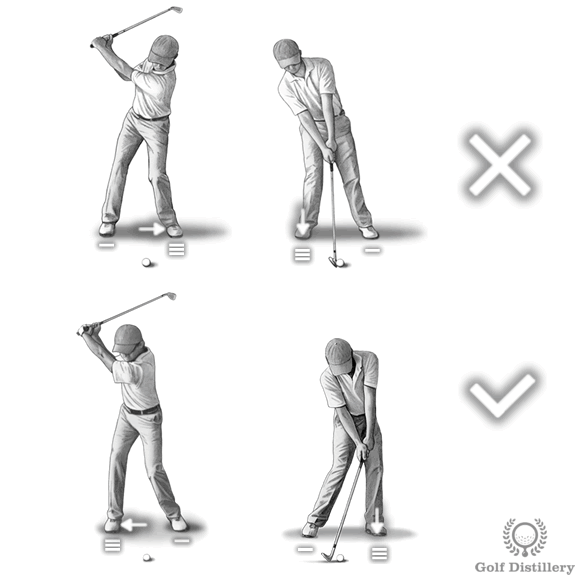
Reverse Pivot
Golf Swing Error – Illustrated Guide
A golfer with a reverse pivot swing will move his body weight during his golf swing in the opposite way that he is supposed to. Indeed, during the back swing he will move his weight towards the front foot while during the downswing he will move his body weight towards his back foot.

This is directly opposite the correct weight distribution direction that is found in an ideal golf swing. At address the body weight should be split evenly between the two feet. During the back swing weight should be moved towards the back foot until the top of the swing is reached. From that point on, weight distribution should transition towards the front foot during the downswing until most of the weight rests on top of the front foot at the follow through.
Problems Associated with a Reverse Pivot Swing
Inadequate Force Transfer onto the Ball
The golf ball can only fly towards the target with its full shot height and vigor if the golfer is able to successfully transfer the force accumulated during the golf swing into the ball at impact. But for that to happen, sufficient force needs to be created in the first place. And that can only happen when weight moves towards the front foot at impact after coming in from the back foot.

Leads to Hitting Up on the Ball and Thin Shots
Seeing the weight of the golfer resting on his back foot at impact will also see the bottom of the swing arc well behind the ball. This translates into a far from ideal impact position where thin shots are likely to not occur. You therefore make proper impact between the face of the club and the golf ball.


No comments:
Post a Comment